


Into the Unwritten Story: A Descent into Agrafa Mountains - Greece
The Story behind the name "Agrafa"
The story behind the name dates back to the Ottoman occupation of Greece. Because the terrain was so steep, jagged, and difficult to navigate, the Ottoman tax collectors found it nearly impossible to reach the remote villages hidden in the peaks.
Tax Evasion by Nature: Since the authorities couldn't count the people or the property there, the region was officially left "unwritten" (Agrafa) in the Sultan’s tax registers.
A Sanctuary of Freedom: This isolation made Agrafa a legendary stronghold for Greek rebels and people seeking freedom, as it was one of the few places where Ottoman law could not be enforced.
Fun Facts:
The Wild West of Greece: It is considered one of the cleanest and most untouched natural areas in Europe, with very few paved roads even today.
The Sykia Tunnels: The mountains are home to "The Throat of the Devil," a series of hand-carved, dark tunnels that feel like a scene from a movie.
Ghostly Landscapes: You can find abandoned projects and "unwritten" history everywhere, from half-finished dams to ancient stone bridges that look like they belong in a fantasy novel.
I. The Skeleton of the Mountain
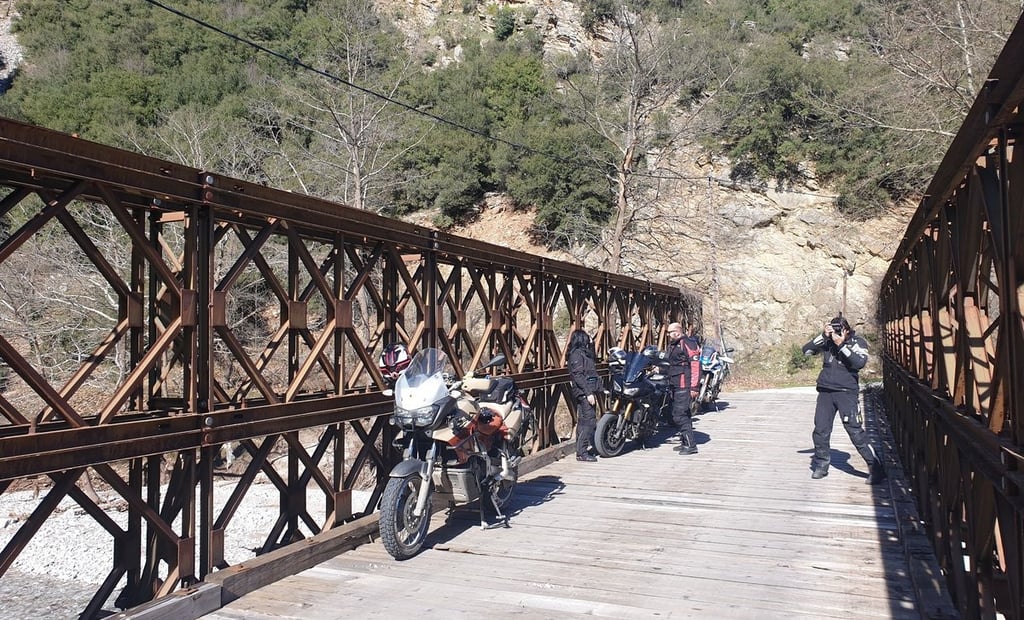
Our entry was marked by the scream of tires on the rusted slats of a Bailey Bridge over the Acheloos River. These bridges are the temporary stitches holding a crumbling landscape together, a metal lattice vibrating with the low, guttural thrum of our engines. Beneath us, the river moved like liquid lead, indifferent to our crossing.
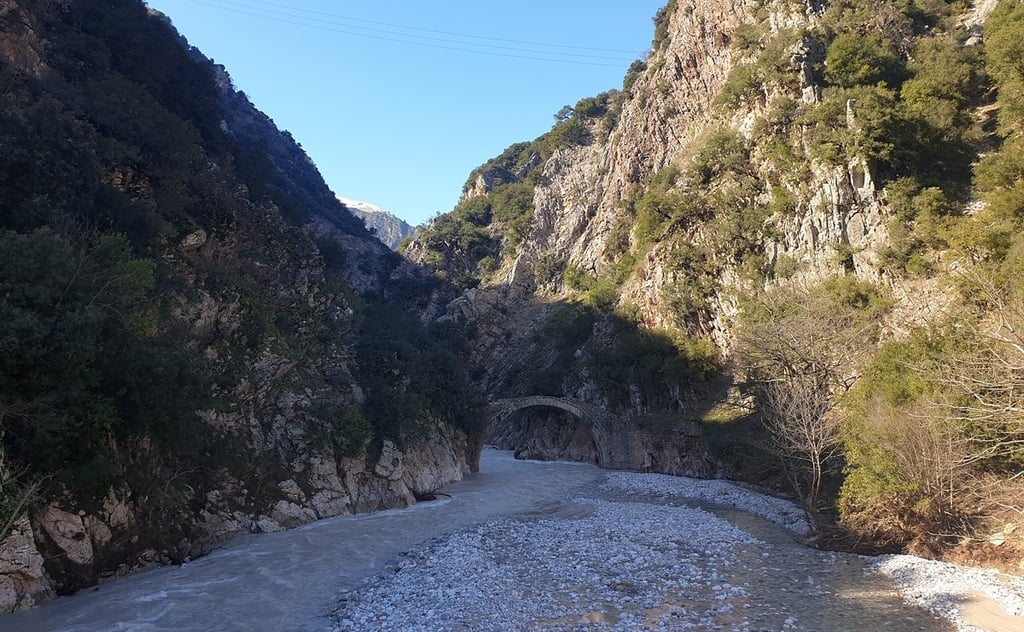
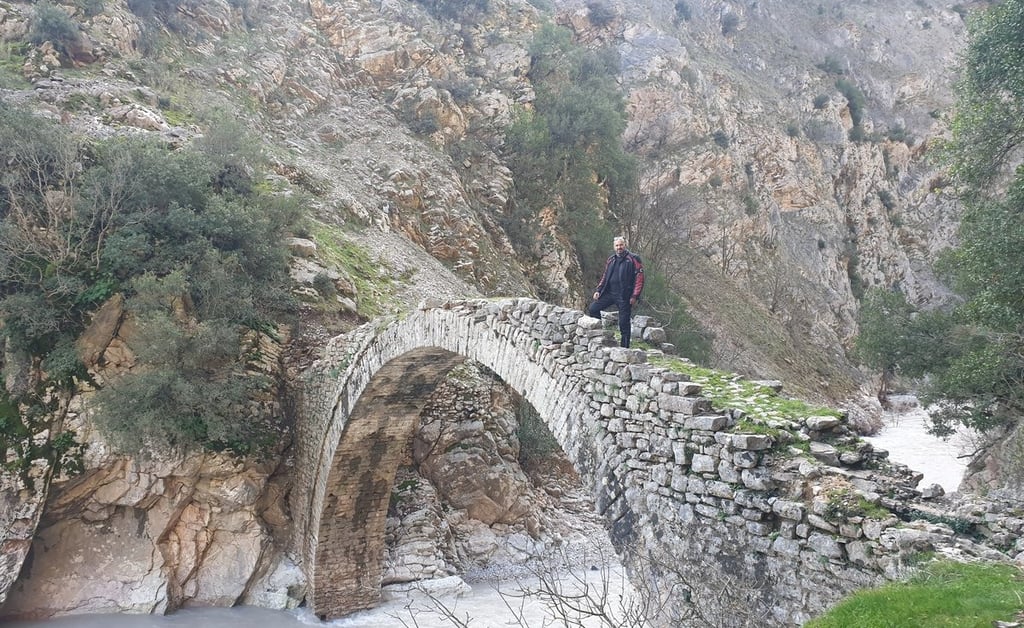
We stopped at the Petrilo Stone Bridge, an ancient limestone arch that felt less like a man-made structure and more like a jagged bone protruding from the earth. Standing on its narrow spine, you feel the weight of the centuries. The air here is thin and tastes of wet slate. There is no birdsong—only the sound of the wind whipping through the gorge, whispering that we are merely intruders in a land that belongs to the stone.
Prologue: The Fellowship of the helmet
The air at the foothills of the Pindus range was heavy with the scent of pine and the looming threat of the peaks. We stood at the threshold of Agrafa, a land defined not by its roads, but by the absence of them. Four riders, four machines, and a single ambition: to navigate the "Agrafa Mountains" before the mountain decided to close its gates for the winter.
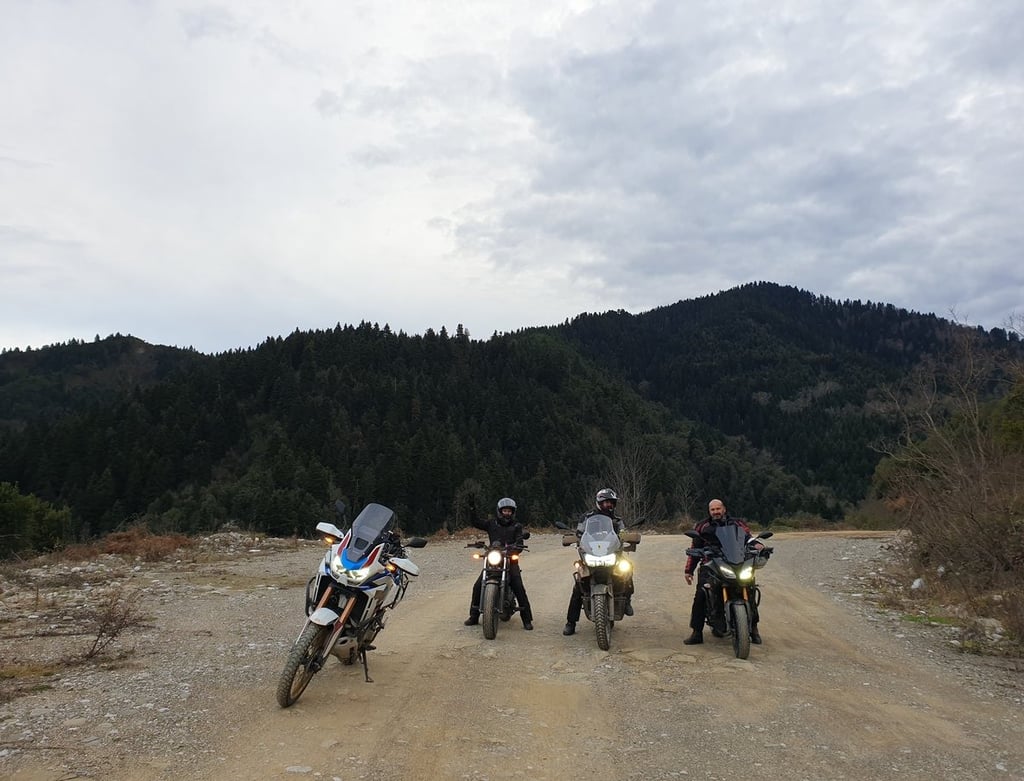
Our group was a study in mechanical contrast, each motorbike a different tool for the same brutal terrain:
Giota, steady and resolute, sat astride her Honda Rebel 500, its low profile ready to navigate the narrow, crumbling edges of the Argithea passes.
Giannis hummed with his Yamaha Tracer 900, a machine built for the sweepers that would soon turn into jagged limestone traps.
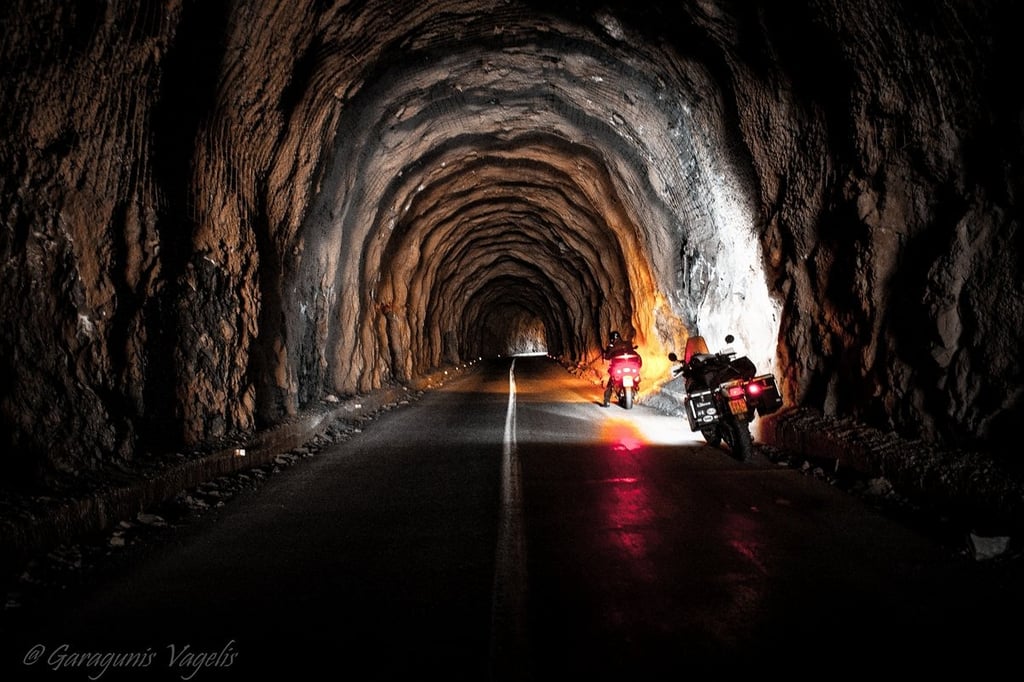
Apostolis brought the thunder(?) of the Aprilia Caponord 1000, its V-twin roar destined to echo off the raw, hand-carved walls of the Sykia Tunnels.
Vagelis led the charge on the Honda Africa Twin 1100, the ultimate desert-born weapon for a landscape that felt more like the end of the world than the heart of Greece.
As we clicked our visors down, the modern world fell away. Ahead lay the Throat of the Devil, the weeping stone of the abandoned diversion projects, and a silence that only a motorbike can truly break. We weren't just going for a ride; we were going to find out why the Ottomans left this place off the map.
II. The Throat of the Devil (Sykia's Tunnels)
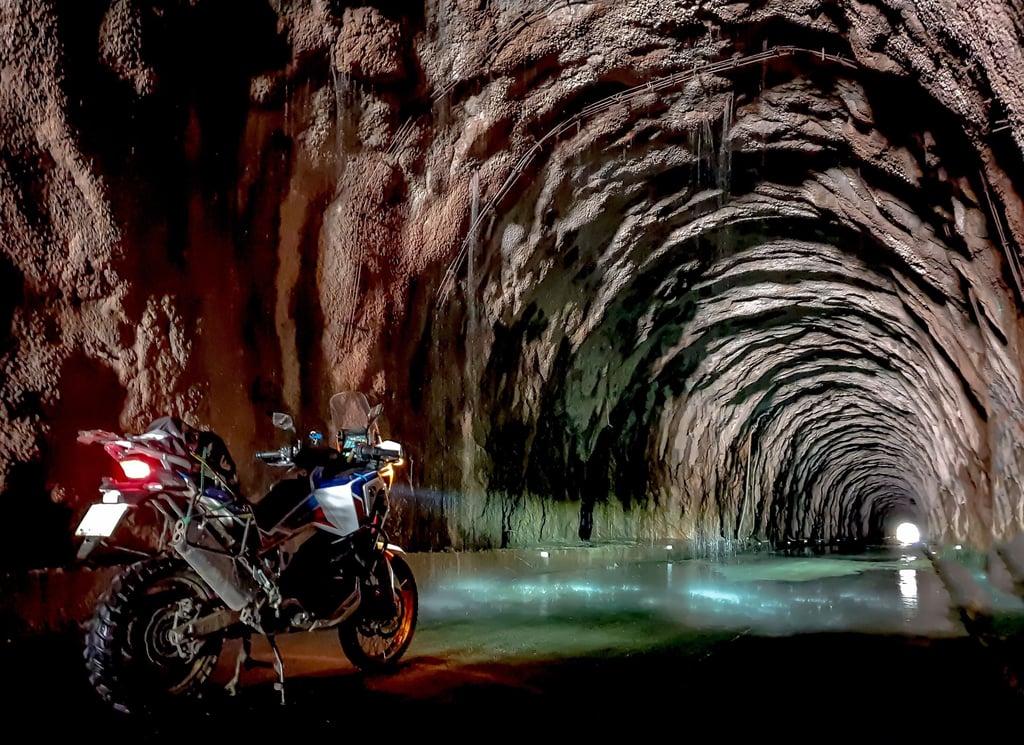
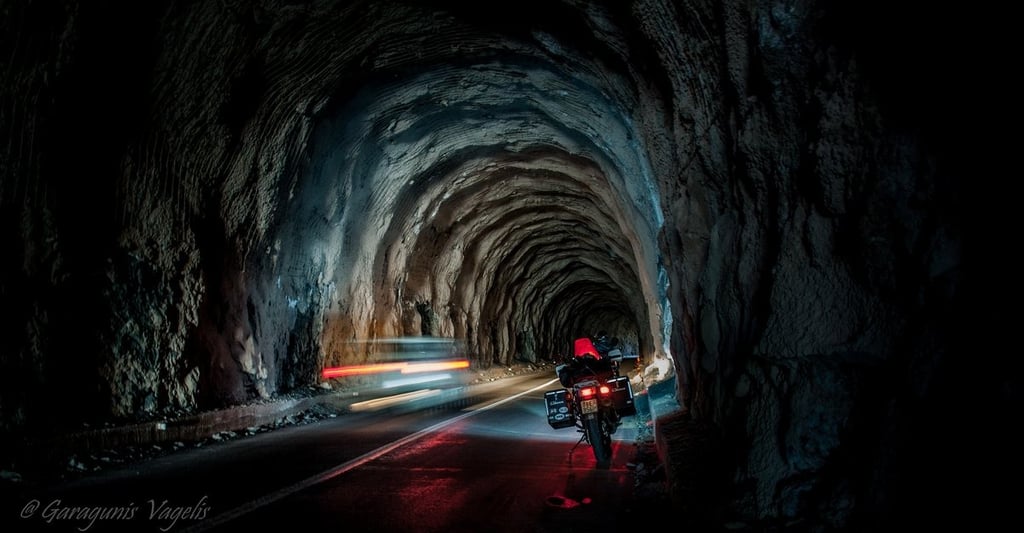
The road eventually led us toward the abyss: the Sykia Tunnels, known to those who fear them as the Throat of the Devil. But these are not ordinary roads; they are the scars of a monumental failure.
Born from the Acheloos River Diversion project, these tunnels were meant to be the arteries of a massive 170-meter-tall dam. The goal was to bend nature to human will, stealing the river’s flow to irrigate distant plains. But the mountain fought back. A decades-long war of legal battles and environmental outcry eventually paralyzed the machines. The project was abandoned, leaving behind these hollowed-out monuments to human hubris.
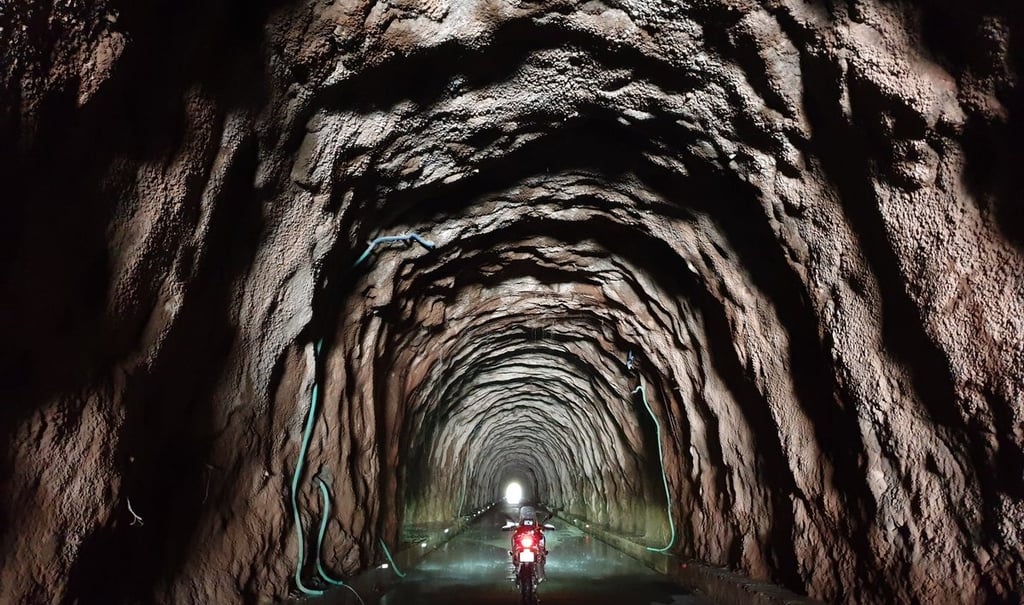
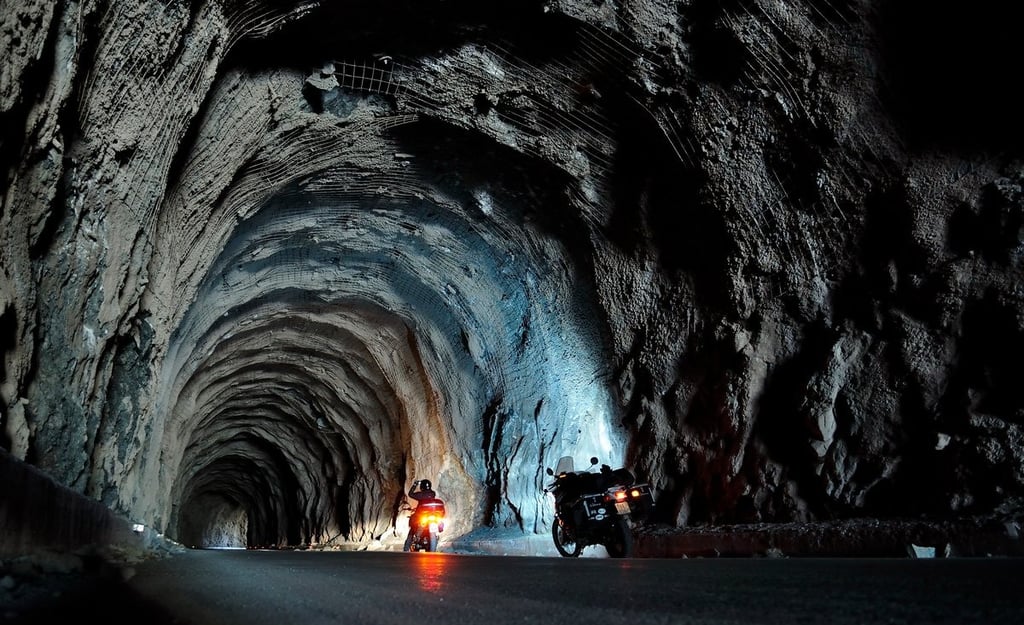
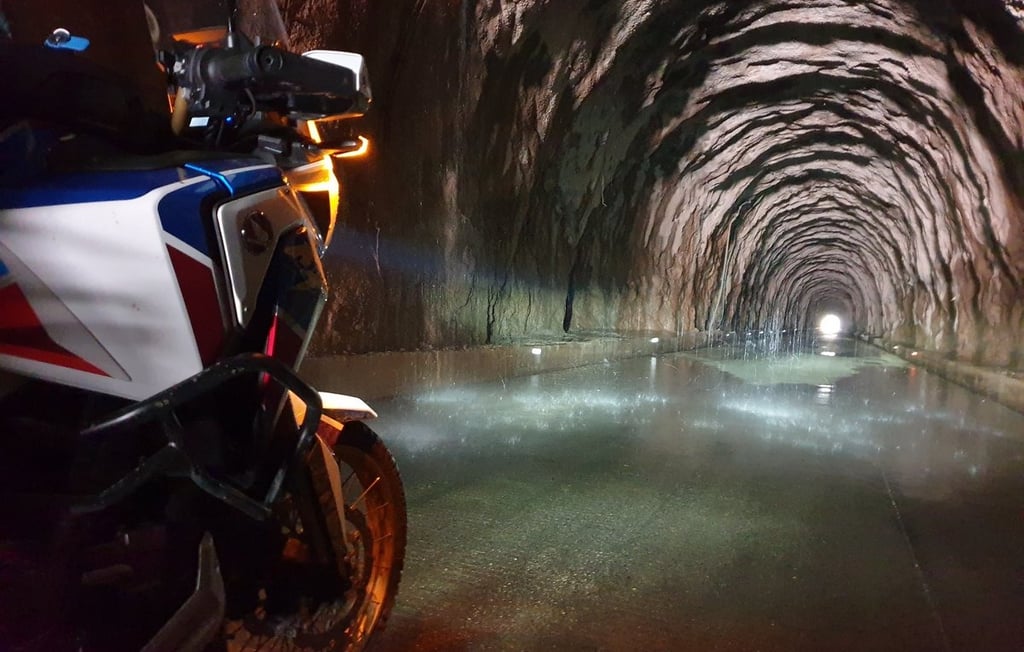
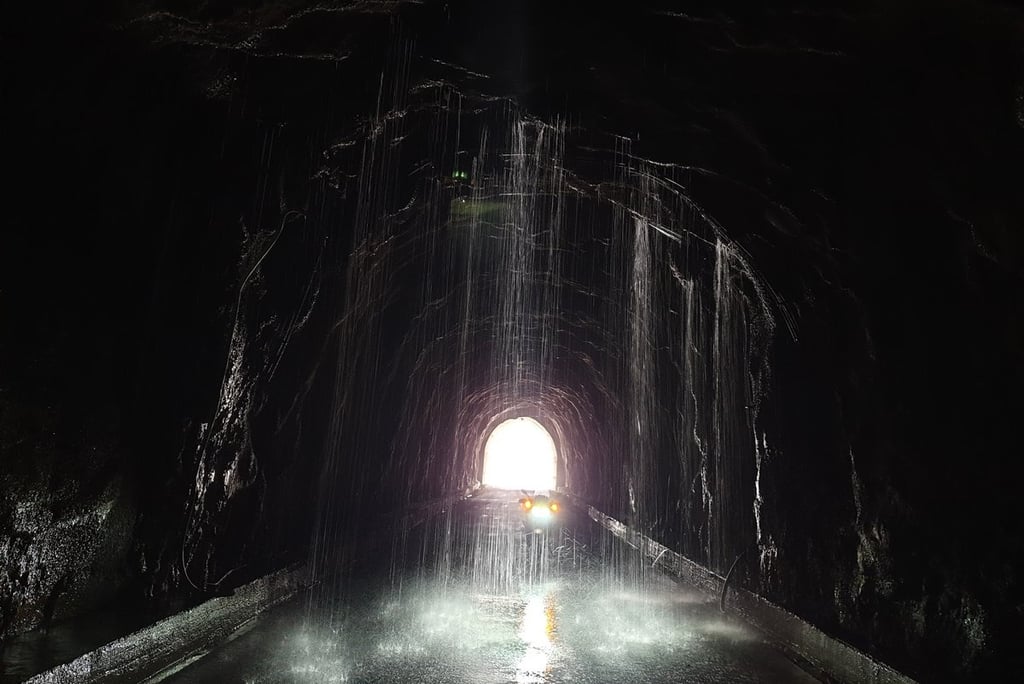
Inside, the transition is a physical blow. You leave the open air and are swallowed by raw, hand-gouged stone. There is no concrete lining here—the work stopped before the mountain could be tamed. It is a place of perpetual twilight, lit only by the violent red flicker of our taillights and the cold, piercing white of our LEDs.
Then comes the sound. It starts as a low hiss and grows into a roar. The rain that drips from the roof of the tunnel is the mountain slowly weeping into the unfinished void. It falls in heavy, shimmering curtains, drenching our gear and turning the tunnel floor into a black mirror that reflects the mechanical skeletons of our bikes. In the Throat of the Devil, you don't just ride; you submerge into a ghost of industrial ambition.
The Story of the Sykia Dam
The tunnels were excavated as part of the Sykia Dam project, a colossal 170-meter-tall earth-fill dam started in 1996. The goal was to divert a massive portion of the Acheloos River through the mountain to irrigate the thirsty cotton plains of Thessaly and generate hydroelectric power.
The tunnels you explored, including the "Throat of the Devil," were built to serve as diversion tunnels and access ways for the dam's construction. However, the mountain itself—and the people who protect it—fought back.
Why They Were Never Completed
The project stalled, leaving behind the skeletal, "unwritten" landscape you photographed, for three main reasons:
Legal Warfare: Since 2005, a series of high-profile legal battles reached the Council of State (Greece's highest administrative court). Environmental groups and local communities successfully argued that the project would cause irreversible ecological damage and destroy historic villages.
Environmental Outcry: Critics pointed out that diverting 600 million cubic meters of water annually would devastate the river's ecosystem and the surrounding Agrafa wilderness.
Funding and Redesign: After hundreds of millions of euros were spent, the project was suspended due to a lack of remaining funds and a shift in national energy priorities. Recently, the project has been under redesign to potentially focus on smaller-scale hydroelectricity rather than massive water diversion.
Today, the tunnels remain as a dark monument to a "war" between man-made ambition and the raw power of the Agrafa mountains. They are left unlined and weeping, slowly being reclaimed by the "rain" that drips from the heart of the stone.
III. The Ritual of Silence
When you finally pull over inside the Sykia Tunnels, do not just keep moving. Perform this ritual: kill the ignition, switch off your lights, and let the darkness settle.
Listen to the rhythmic, metallic "ping" of your exhaust pipes as the heat of the climb begins to bleed out into the freezing mountain air. It is the sound of a machine catching its breath. In that mechanical silence, the only other sound you will hear is the heavy, relentless dripping of the water from the unlined rock roof, echoing through the hollowed-out "Throat of the Devil" like the ticking of an ancient, subterranean clock. It is a reminder that while you are just passing through, the mountain is slowly, patiently reclaimed by the elements.
IV. The End of the Path
Emerging from the tunnels offered no relief. As we climbed toward the Argithea Mountain Pass, the earth proved its restlessness. We found the road severed—the asphalt had simply surrendered to the ravine below, leaving nothing but a jagged edge of broken dreams. A thin strip of orange safety mesh was the only thing standing between us and a three-hundred-foot drop.
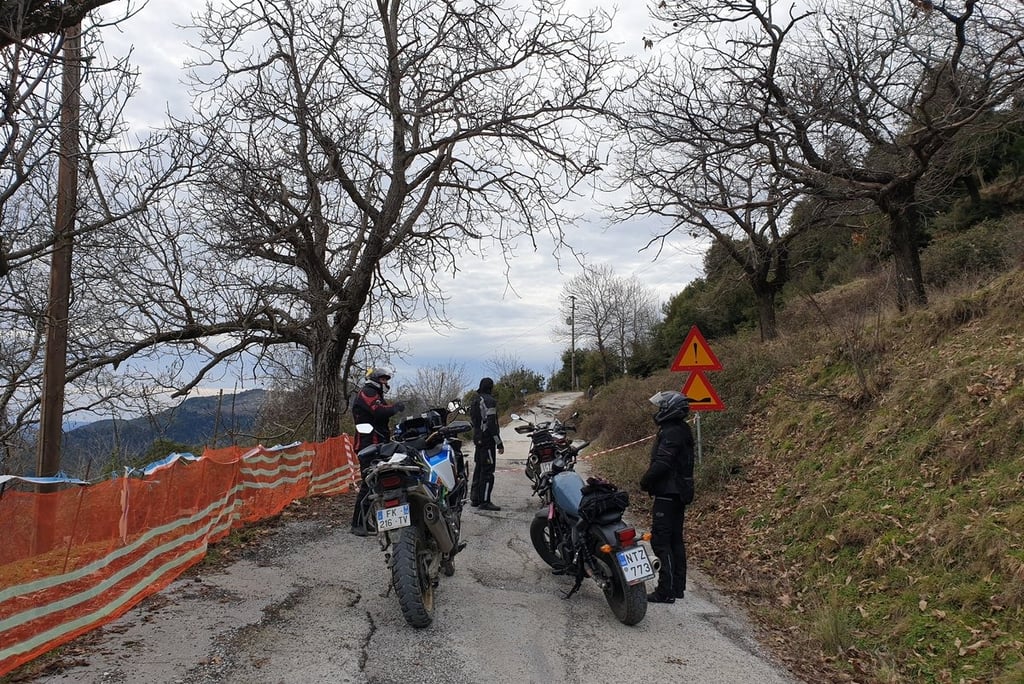
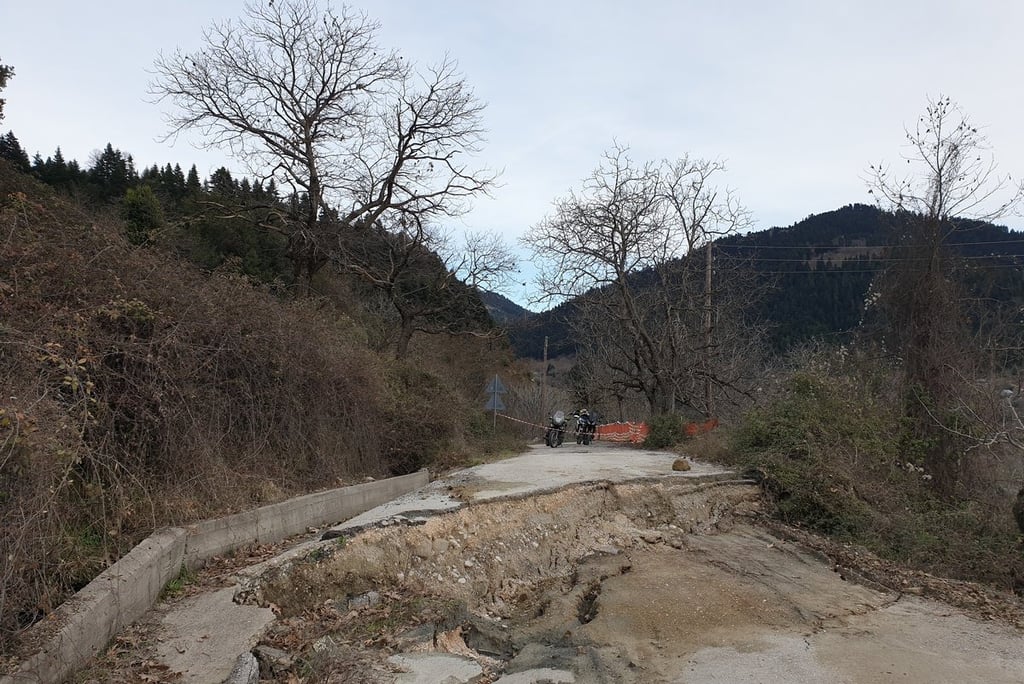
We didn't want to turn back. We dismounted and tried to push our motorbikes through the debris, fighting the loose earth and the sheer weight of the machines to bypass the gap. But the mountain refused us. The ground was too unstable, the risk of a slide too high. It was not possible. Defeated by the terrain, we were forced to retreat and find another alternative route through the labyrinthine peaks.
V. Greek coffee Rituals
As the sun dipped behind the jagged peaks, we finally found refuge in the Anthiro Village Square. We parked beneath the massive, skeletal branches of ancient plane trees. The village was silent, its stone houses watching us like blind eyes from a forgotten era.
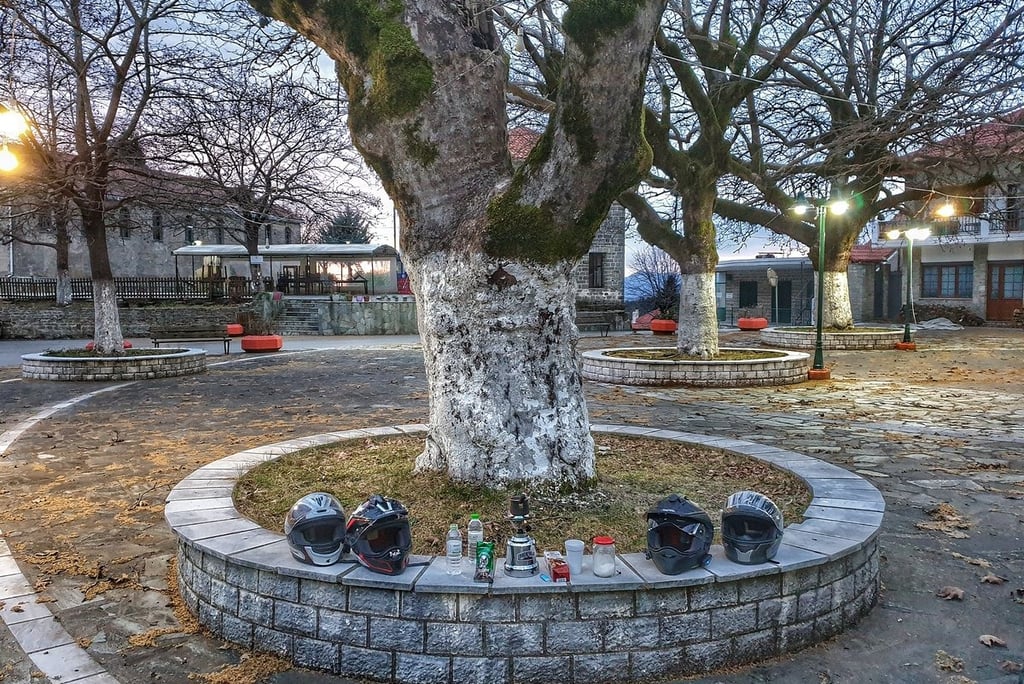
We lined our helmets on the cold stone of a planter—a row of modern skulls in an graveyard. We began our ritual: brewing handmade Greek coffee over a portable stove, the steam rising into the freezing mountain air.
As we sat there, a village priest passed by through the shadows. He stopped, looking at our mud-caked machines and dusty gear, and asked what we were doing in this forgotten corner of the world so late in the day. We joked that we were lost, our voices echoing in the quiet square. He let out a warm laugh, offered a blessing, and told us to have safe roads. We sat in the fading light of Anthiro, warmed by the coffee and that brief human spark, knowing that while the mountain is indifferent, its people still watch over the travelers of the "Unwritten."
⚠️ Traveler’s Note: Surviving the Agrafa Mountains
Agrafa is as dangerous as it is beautiful. If you choose to follow these tracks, keep the following in mind:
Fuel is a Luxury: There are no gas stations once you enter the heart of the mountains. You must fill your tank to the brim before leaving the main hubs. Running dry here means a long walk through a very dark night.
The Falling Earth: The mountain is alive and constantly shedding its skin. Rockfalls are frequent; a clean corner can turn into a boulder field in seconds.
Steep & Narrow: The roads are unforgivingly steep and often narrow enough that two bikes can barely pass. Precision is mandatory.
The Unseen Residents: Behind every blind corner, you may meet the true owners of these roads—cows, goats, or sheep standing in the middle of your line. Slow down; they don't move for engines.
Sykia's Tunnel Coordinates: 39.29991712366745, 21.4178696962885
As the final embers of our handmade Greek coffee cooled in the Anthiro Village Square, a profound stillness claimed the mountains. The priest’s blessing seemed to linger in the air, a soft counterpoint to the jagged, unforgiving horizon we had spent the day conquering.
Agrafa is not a place you simply visit; it is a place that demands you pay attention. It is found in the grit between your teeth, the soaked lining of your jacket from the Sykia Tunnels, and the mutual silence shared between friends when the road ahead simply vanishes into the ravine.
We came seeking "The Agrafa Mountains" and in return, the mountain gave us a story that no map could ever contain. As Giota, Giannis, Apostolis, and Vagelis steered their motorbikes back toward the world of paved roads and streetlights, we carried a piece of that mountain silence with us. The "Throat of the Devil" may be a monument to failed human ambition, but for us, it was the backdrop for a fellowship forged in stone and shadow.
The engines are quiet now, the metal has stopped its rhythmic pinging, and the dust has settled. But the call of the Pindus remains—waiting for the next time we decide to lose ourselves in the high, dark heart of Greece.
Safe roads to all who seek the Agrafa Mountains & Beoynd.